
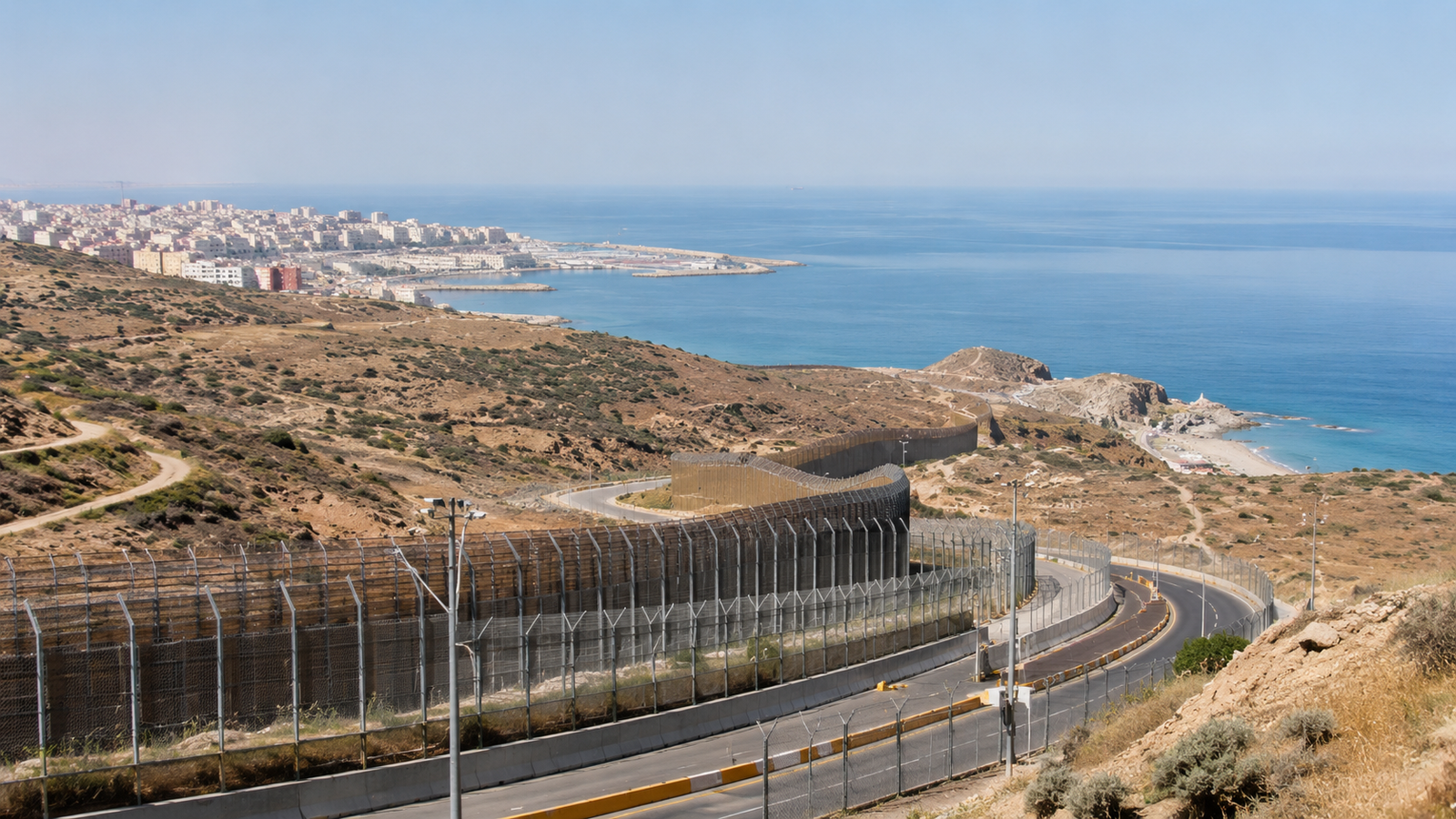

Sweden’s migration minister has welcomed Spain’s rapid response to the Ceuta migrant crisis but warned that such a mass border crossing must not happen again. EU migration ministers discussed the situation during an emergency video meeting on Tuesday, 4 August.
Tens of thousands of people entered Ceuta from Morocco over several days, while at least 75 deaths have been confirmed. Ceuta is a Spanish autonomous city on the North African coast and forms part of the European Union’s external border.
In brief:
- What happened: Tens of thousands of people crossed from Morocco into the Spanish territory of Ceuta.
- When: The main crossings took place in late July and early August 2026.
- Where: Ceuta, a Spanish city on the North African coast.
- Impact: At least 75 people died, while estimates of the number entering Ceuta range from 72,000 to around 80,000.
- Source: The Swedish government, Spanish authorities and EU ministers.
Sweden responds to Ceuta migrant crisis
Swedish Migration Minister Johan Forssell attended the emergency meeting with ministers from EU countries and Schengen-associated states. Representatives from the EU border agency Frontex, the EU Agency for Asylum and Europol also took part.
Before the meeting, the Swedish government said it was concerned about events in Ceuta and supported the assistance being provided to Spain by Frontex. Sweden also called for stronger protection of the EU’s external border and measures to prevent similar incidents.
After the meeting, Forssell said Spain’s authorities had acted firmly and that many of the people who entered Ceuta had returned to Morocco.
“But it must not happen again,” he told Swedish news agency TT in comments published by Aftonbladet. The quotation has been translated from Swedish.
Forssell said the European Commission had informed ministers that around 80,000 people crossed the border. He described it as the largest single-day border crossing in 20 years.
Spanish authorities have given a lower figure. Spain’s interior minister said around 72,000 people entered Ceuta and approximately 70,000 had since returned to Morocco. The different figures may reflect when estimates were made and which crossings were included.
EU ministers praise Spain’s response
Ireland currently holds the rotating presidency of the Council of the European Union and chaired Tuesday’s meeting.
“We commend Spain for its swift response to the situation in Ceuta and express our deepest condolences over the tragic loss of life,” Irish Justice, Home Affairs and Migration Minister Jim O’Callaghan said, according to AFP.
O’Callaghan said responsibility for protecting the EU’s external borders was shared between member states. He added that the bloc was ready to support Spain and improve its ability to respond to similar events.
Spain’s Interior Minister Fernando Grande-Marlaska described the meeting as constructive. He said other countries recognised that Spain had responded quickly and effectively after the border was overwhelmed.
The Swedish government said the discussion covered stronger external border controls, action against irregular migration and ways to prevent another mass crossing.
The meeting did not result in an immediate decision on new EU migration rules. More detailed discussions about possible measures are expected to continue later in 2026.
Sweden maintains criticism of Spanish policy
Although Forssell praised Spain’s handling of the immediate crisis, he maintained his criticism of the country’s wider migration policy.
He argued that the signals sent by a government’s policies can influence migration decisions and said that some European politicians were playing down this issue.
Swedish Prime Minister Ulf Kristersson had also criticised Spain before the emergency meeting. Sweden was among the EU countries that supported calls for ministers to discuss the crisis.
Spain has rejected claims that its migration policy directly caused the mass crossing. The Spanish government has pointed instead to online misinformation, criminal networks and a lack of warning before people reached the border.
European Commissioner for Internal Affairs and Migration Magnus Brunner said the Commission had not established a direct link between Spain’s plans to regularise undocumented residents and the events in Ceuta. However, he said the Spanish policy sent an unhelpful signal to other parts of Europe.
Reports from Morocco indicate that false claims circulated on social media before the crossings. Some posts suggested that the border was open or that people reaching Spanish territory would receive permission to remain.
Italy introduced temporary border checks
The crisis led to disagreements between EU countries before Tuesday’s meeting. Italy introduced temporary passport checks for passengers arriving by air or sea from Spain.
The measure did not remove either country from the Schengen area. It temporarily restored checks on travel routes between Italy and Spain for one month.
Ceuta itself is outside the Schengen passport-free zone, although it is Spanish territory. Spain said the large majority of those who entered the city did not travel onwards to mainland Europe.
Denmark was also strongly critical of Spain during the first days of the crisis. After the meeting, Danish Immigration Minister Morten Bødskov said he was “very satisfied” with Spain’s response, according to TT.
The number of confirmed deaths remained at least 75 on Tuesday, although authorities in Ceuta had reported a higher figure of up to 88. The final death toll may change as authorities continue to investigate the crossings.
