
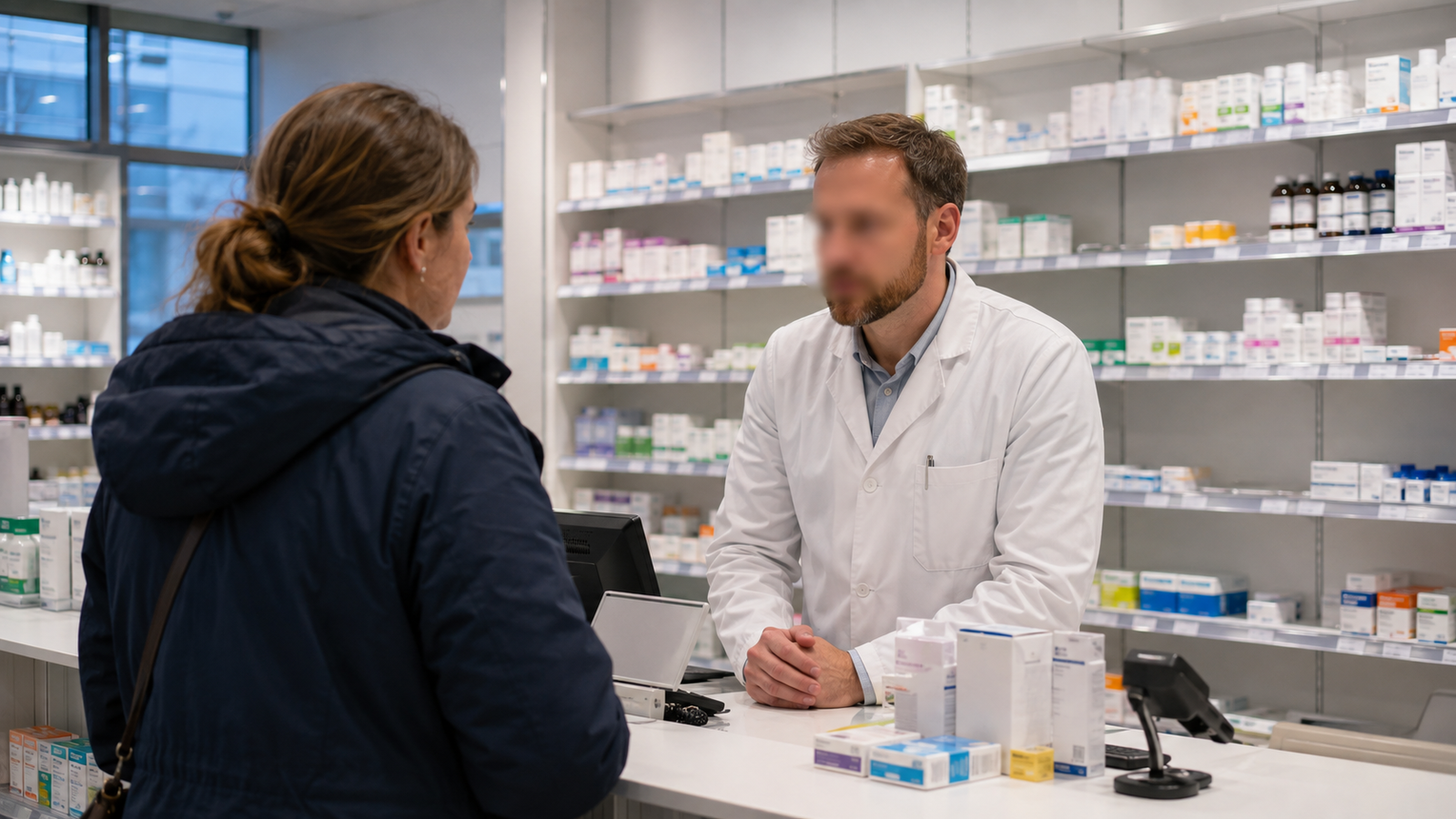

An oestrogen shortage in Sweden is leading women in the northern county of Norrbotten to seek their medicines across the border in Finland. Pharmacies in Tornio are now also reporting that some products are selling out more quickly.
Swedish pharmacies have struggled to supply several oestrogen patches, gels and sprays during 2026. Sveriges Radio reports that patients are travelling from Sweden to Tornio, the Finnish border city opposite Haparanda, after failing to find their prescribed products locally.
Oestrogen shortage in Sweden affects Tornio
Pharmacy workers in Tornio told Sveriges Radio that Swedish customers had contributed to local stocks falling faster than in other parts of Finland.
“Because of the Swedish customers, the oestrogen medicines ran out more quickly in Tornio than elsewhere in Finland,” pharmacy employee Petra Lönnblad told the broadcaster. The quotation has been translated from Swedish.
The report did not provide figures showing how many patients had travelled across the border or how many packages they had purchased. The development appears to be particularly noticeable in the Haparanda–Tornio area, where crossing between Sweden and Finland is part of everyday life.
Pharmacy staff in Haparanda said they regularly had to tell patients that their prescribed products were unavailable. Tornio pharmacies are now facing similar problems as demand increases on the Finnish side of the border.
A pharmacy employee in Tornio suggested that differences in medicine prices and how much national systems are prepared to pay could influence which markets receive available supplies. This was presented as an employee’s assessment rather than a confirmed explanation from a Finnish or Swedish authority.
Several oestrogen products remain unavailable
The Swedish Medical Products Agency, Läkemedelsverket, says the shortages mainly affect oestrogen delivered through the skin as patches, gel or spray. Increased demand in Sweden and other countries has exceeded the available supply.
All strengths of Estradot patches were listed as being in shortage on 5 August. Current forecast dates for restored supply range from 28 August to 21 October 2026, depending on the strength. The authority warns that these dates are estimates and may change.
The estimated end date for shortages of the Estrogel and Divigel products is 31 August. Deliveries are expected before then, but the quantities may not cover the full level of demand. Swedish pharmacies have also received permission to order some foreign packages of these products.
Supply of the Lenzetto oestrogen spray is expected to remain limited until the end of 2026. Regular deliveries will continue, but the manufacturer does not expect them to meet the full demand in Sweden.
A product can therefore remain officially listed as unavailable even when individual pharmacies occasionally receive small deliveries.
Patients may need a different prescription
Läkemedelsverket advises patients to contact their healthcare provider when their prescribed oestrogen medicine cannot be ordered. A doctor may need to issue a new prescription for another product or method of treatment.
The authority says there is currently good availability of oestrogen tablets. However, tablets are not automatically suitable for every patient, and treatment should not be changed without an individual medical assessment.
Other possible options include a different patch, gel or spray. Availability among these products is also limited, meaning an alternative that is available one week may later become difficult to obtain.
In some cases, a doctor may apply for a licence allowing a patient to receive a medicine approved in another country. Patients can also use the stock search on FASS to check whether a Swedish pharmacy reports having a particular product available.
Swedish prescriptions can be used abroad
A prescription issued in Sweden can generally be used at a pharmacy in another country within the European Economic Area if it meets the cross-border requirements.
According to 1177, the prescription must contain more information than a standard Swedish prescription. This includes full contact details for the prescriber and clear information about the medicine, strength and quantity.
Swedish electronic prescriptions cannot normally be accessed directly by pharmacies outside Sweden. Läkemedelsverket advises patients to request a paper prescription prepared for use abroad before travelling.
Finnish pharmacies can dispense medicines prescribed in another EU or EEA country when the prescription meets Finnish legal requirements and the medicine is authorised in Finland. Patients must visit the pharmacy personally and bring a passport or official photo identification.
Patients may have to pay the full Finnish price at the pharmacy. They should keep the prescription information, receipt and medicine packaging if they plan to ask about possible reimbursement later.
Government reviews Sweden’s medicine supply
The shortage forms part of a wider debate about how Sweden secures access to medicines during periods of limited international supply.
In June, the government expanded an assignment given to the Dental and Pharmaceutical Benefits Agency, TLV. The agency will examine whether Sweden’s willingness to pay affects access to cost-effective medicines as the international market changes.
The government has also appointed an inquiry to consider a stronger and more coordinated state responsibility for medicines and vaccines. Its final proposals are due by 31 December 2027.
Patients who cannot obtain their medicine are advised to contact the prescribing clinic or another healthcare provider rather than changing the dose, stopping treatment or replacing the product without medical advice.
