
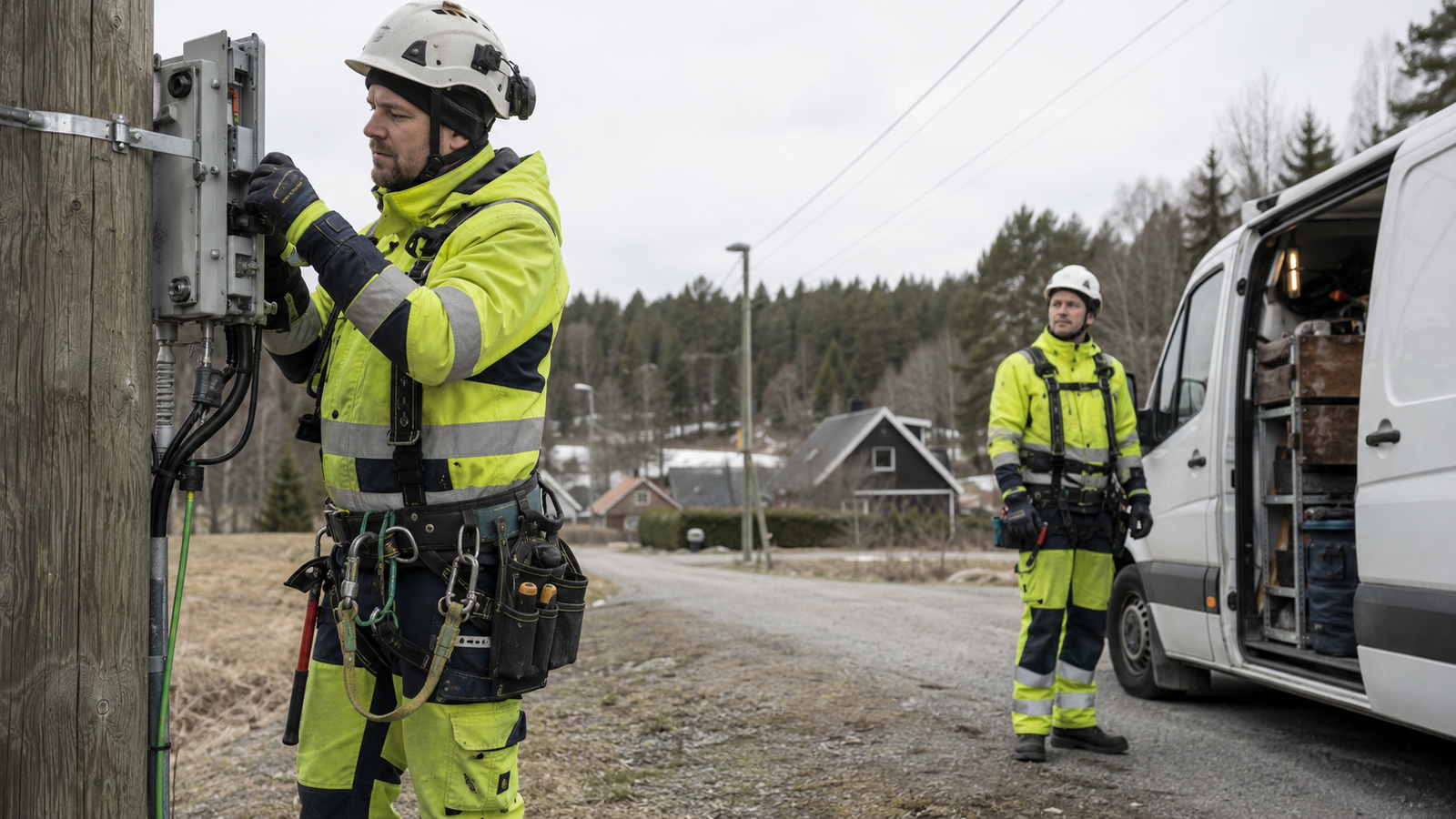

Demand for skilled energy workers in Sweden remains high, despite continued unemployment in the wider labour market. The sector needs to recruit more than 1,200 people now, with tens of thousands expected to be needed over the coming years.
More than half of energy companies report difficulties finding staff for important roles, including distribution electricians, operations engineers and electrical power engineers. The shortage could affect Sweden’s ability to expand and maintain the electricity system needed for electrification.
In brief:
- Main finding: Sweden’s energy sector currently needs more than 1,200 new workers.
- Long-term need: Tens of thousands may need to be recruited over the coming years.
- Roles affected: Distribution electricians, operations engineers and electrical power engineers.
- Job prospects: Demand for electricians is expected to increase over the next five years.
- Average salary: Distribution electricians earned an average of SEK 42,900 per month in 2025.
Demand for energy jobs in Sweden grows
The recruitment problem was highlighted in a report by SVT Värmland. According to figures cited from industry organisation Energiföretagen Sverige, more than half of companies in the sector have difficulty recruiting people with the right skills.
The need is expected to grow as Sweden expands its electricity networks and replaces fossil fuels with electricity in transport, industry and heating. Retirements among existing employees are adding to the pressure.
An earlier industry assessment from Energiföretagen estimated that around 8,000 engineers and technicians would need to be recruited during a three-year period. About 1,700 workers in these groups were also expected to retire.
The latest figures reported by SVT indicate an immediate need for more than 1,200 workers. Over a longer period, the total requirement across different occupations could reach tens of thousands.
The shortage exists even though unemployment remains relatively high. Statistics Sweden reported that 592,000 people were unemployed in June 2026. This was equal to 9.9 per cent without seasonal adjustment and 8.7 per cent after seasonal adjustment.
The figures show that general unemployment can exist at the same time as shortages in occupations requiring specialist technical education and practical training.
Karlstads Energi visits local schools
Karlstads Energi is trying to increase young people’s interest in the sector by visiting schools and teaching pupils how the electricity network works.
Henrik Jönsson, an HR specialist at the municipal energy company, said its workforce has an uneven age structure.
“It is devastating. At the moment, we see a fairly unbalanced age distribution among our employees,” Jönsson told SVT.
The company has held lessons for fourth-year primary school pupils. The aim is to explain how electricity reaches homes and businesses and introduce children to jobs they may not have considered before.
“I saw some curious faces, so I think we have a chance,” Jönsson said after one of the school visits.
The initiative will not solve the immediate shortage, as the pupils are still several years away from entering employment. Karlstads Energi hopes that early contact with the industry will encourage more young people to choose technical subjects and electrical training later.
Distribution electricians have strong job prospects
Distribution electricians are among the workers needed to build, repair and maintain Sweden’s electricity networks.
Their work can include installing new power lines, repairing underground cables and maintaining both high- and low-voltage systems. Much of the work takes place outdoors and may involve responding quickly to power cuts during storms or other emergencies.
Sweden’s Public Employment Service, Arbetsförmedlingen, says demand for electrical workers is expected to increase during the next five years. One reason is the growing need for skills connected to the green transition. Its occupational information also describes distribution electricians as workers who build, repair and maintain the networks that carry electricity through society.
Training is normally required at upper-secondary or higher vocational level. Relevant courses include electrical technology, electrical power and electricity distribution. People who completed similar electrical training outside Sweden may also be able to continue with specialist training, depending on how their qualifications are assessed.
The occupation also offers salaries above the average for several other practical trades. Official Statistics Sweden salary data shows that distribution electricians earned an average of SEK 42,900 per month across all sectors in 2025.
This is an average before tax rather than a guaranteed starting salary. Actual pay can vary according to experience, employer, region, working hours and responsibility.
Electricity expansion depends on skilled staff
Sweden is planning major investments in electricity generation and networks as demand from industry and transport increases. These projects require more than new power plants, cables and substations.
Companies also need workers who can operate the system, repair faults and ensure that electricity reaches customers safely. Energiföretagen has identified access to qualified employees as one of the main conditions for expanding Sweden’s energy system.
The recruitment challenge covers several levels of education. Companies need practical specialists such as distribution electricians, as well as operations staff and engineers who can plan and manage increasingly complex electricity networks.
Without enough qualified workers, projects may take longer to complete and companies may find it harder to replace employees who retire. The industry is therefore calling for more training places, closer cooperation with schools and clearer information about the range of energy jobs available in Sweden.
